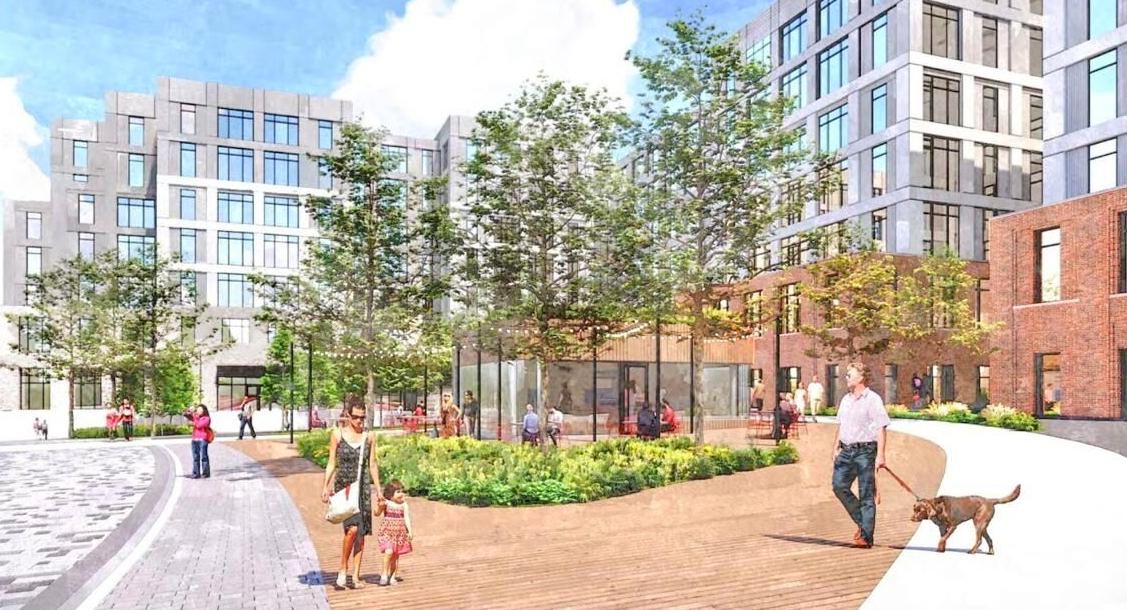
Shown is a rendering of Hub Clemson, a project that stands to bring about 1,325 beds between apartments and townhomes, 75 new public parking spaces, 674 spaces for residents and 10,000 square feet in retail space to the area of Keowee Trail in Clemson.
CLEMSON — An overwhelming majority of Clemson residents at a public hearing held by the city Monday expressed dismay over a controversial proposed development.
That development is known as Hub Clemson, a project that currently stands to bring about 1,325 beds between apartments and townhomes, 75 new public parking spaces, 674 spaces for residents and 10,000 square feet in retail space to the area of Keowee Trail in Clemson.
Representatives, including Andrew Savoy, from Core Spaces once again made the trip to Clemson to speak on the project. Savoy listed improvements Core Spaces believes Hub Clemson will bring to the city.
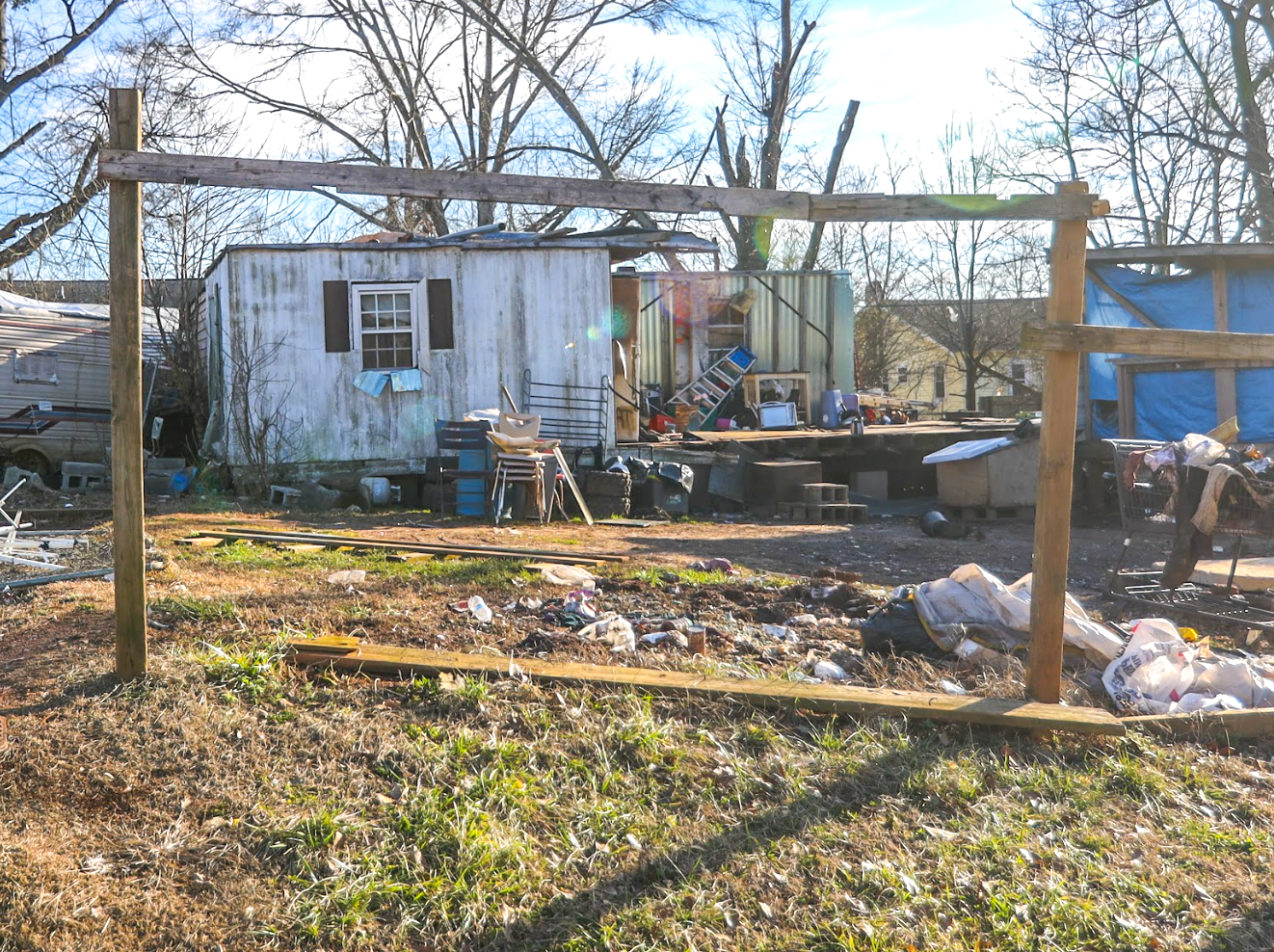
“You have increased park space, an acre of park space on private land with a perpetual public use easement,” he said. “You have improved pedestrian connectivity — we’re getting rid of all the curb cuts along Keowee Trail, we’re providing a sidewalk extension to the CATBus that is on Keowee Trail and College (Avenue). … We’re removing eyesore properties; we’re activating the public space with retail uses.”
Savoy said the project would add 75 free parking spaces and minimize commutes for students due to Hub Clemson’s proximity to Clemson University’s campus.
“The more students live near campus and can walk there every day, that means the less they have to drive there every day,” he said. “Driving to Walmart once a week is a lot less than driving to school seven times a week.”
He also mentioned the financial implications of the project.
“We’re increasing the tax base, so roughly a $2.1 billion per year tax base increase, forever, and roughly $600,000 of that per year is going to Clemson itself,” Savoy said. “We will be paying impact fees, approximately a million dollars of park impact fees to help for the hard costs of the park. And then also we are exploring ways to provide private funding to pay for the design and project management of the public side of the park so that it can be one cohesive idea.”
‘Tsunami of concrete’
Clemson resident Nancy Spitler said Clemson’s Uptown Next report outlines the opposite of what Core Spaces has proposed.
“The idea of Clemson Next, with a considerable amount of public input, was to create a welcoming space for adults, residents and visitors to enjoy, not to create one massive student housing complex,” Spitler said.
“The Uptown Next report states ‘non-residential commercial uses should be focused on College Avenue and Abernathy Park to enhance both environments as inclusive community spaces. Particular attention should be paid to establishing Abernathy Park as a vibrant community destination. Density should be focused within the core of Uptown with relatively less building height and density facing Abernathy Park and College Avenue,’” she said. “What the developer has proposed is quite the opposite – seven-story, high density, rent by the bed apartments on the entire stretch of Keowee Trail.”
Katie Healy spoke on behalf of the residents of multiple Clemson neighborhoods in a letter given to her by Abel community liaison Lisa Bennett.
“On behalf of the residents of the Abel, Cadillac Heights, Calhoun and Red Hill communities in Clemson, which are historically black community neighborhoods in Clemson, I would like to say no to the student development,” Healy read. “We have been gentrified enough. There is so much encroachment in Clemson by student housing that there is no affordable place for full time residents to live anymore. The university does not pay enough for people in these communities to live comfortably in the city. So, why is the city bending over backwards to ensure that students have enough places to live, instead of ensuring that the workforce housing becomes a priority?”
Donna Crader spoke about previous developments that were turned down and what she thinks is too much growth in too little time.
“In 1982, I petitioned my neighbors to oppose a proposed zoning change that would allow for a large apartment complex bordering on our neighborhood where the Clemson Presbyterian Church is currently at Gateway Park,” Crader said. “I’m still coming before council to speak in opposition to a project (that), in addition to all the other mid rises in town, will continue to overwhelm not only Clemson’s downtown residents, but any who have to travel through Clemson for any reason.”
“I personally feel like we’ve been hit by a tsunami of concrete, vehicular traffic, pedestrian traffic, noise and unbelievable growth in too short a period of time to give us the chance to even register it,” she added.
One of few comments of support came from Nick Simmons, a student housing property manager in Clemson.
“I am all for this property for the fact that it entitles kids to come to Clemson. Clemson is a suitcase college. Look at your budget for Christmas and summer when all the kids pack up and leave — Clemson shuts down,” Simmons said. “Everyone knows Abernathy Park, but look at it right now; it’s in shambles. The properties across the street are run down by vines, trees and disgusting buildings. This property is going to come in and fix it up and make it look nice. It’s also going to give the green space to Abernathy Park, which is what it needs.”
The first reading on the proposed development will be held on April 1, according to Clemson mayor Robert Halfacre.