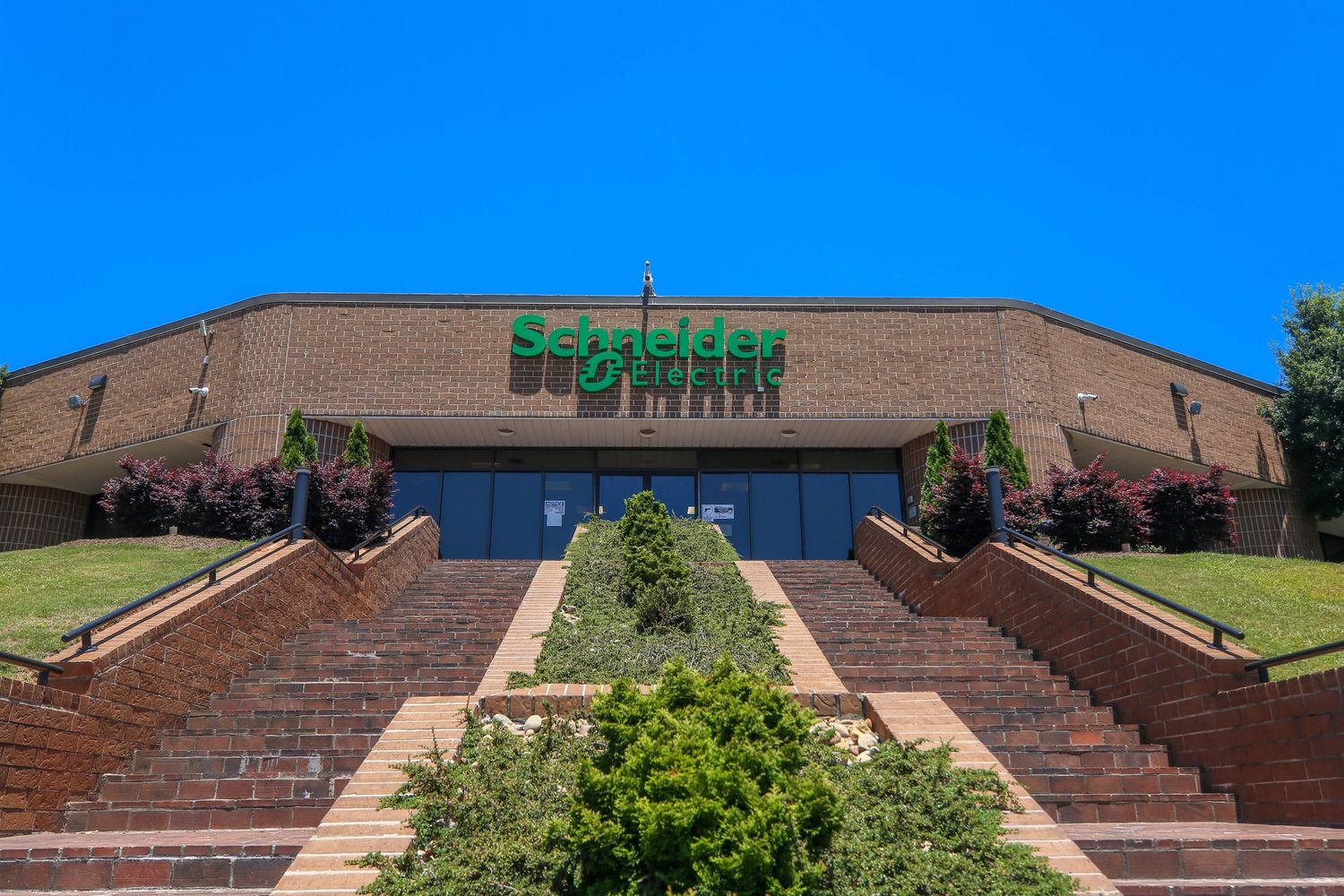
Schneider Electric announced in June that it would be adding 130 new jobs to its Seneca plant through a $23.8 million investment between Seneca and its Columbia plants.
It was an admirable fiscal year for Oconee County in terms of economic growth and development.
The Journal sat down with Jamie Gilbert, president and CEO of Oconee Economic Alliance to discuss what he’s seen over the last fiscal year, which ran from July 2023 to June 2024, as well as the first seven months of the calendar year.
There are 20 metrics Gilbert and his team look at, splitting up 5 categories across the state overall, the state per capita, the Upstate overall and the Upstate per capita.
Gilbert said the county met two of those — and exceeded 17 of the 20.
“We’re looking at almost every category, we (either) had improvement in or at least we stayed the same,” he said.
Oconee County saw five new projects, four expansions and one new industry over the past year. Combined, these endeavors involved a little over $68 million in “new capital investment,” and these created 172 new jobs, according to Gilbert. Those projects include new industry Books for Less and expansions of existing businesses Clarios, Dynamic Fluid Components, Sandvik Coromant and Schneider Electric.
For the entire state of South Carolina — 46 counties — Oconee ranked second in total number of projects, 11th in investments, 13th in jobs, 13th in investments and jobs combined, and 10th in projects, investment and jobs.
Gilbert said the county slipped a bit on job numbers but that’s “fine” when Oconee County has one of the lowest unemployment rates in the state.
“The top 10 counties in the state, population wise, have over 200,000 people,” Gilbert said. “So, getting to those top 10 numbers on total is always going to be a challenge, they’re usually going to have more projects, or at least more investment and jobs, but we get pretty close to them on a lot of occasions.”
But that’s not really the best way to look at it. Gilbert said his team takes a look at per capita to get a true picture of how the county is doing when taking into account the county populations.
“When a project comes in, and those investments are made, or those jobs get created there, it has an impact on that community,” Gilbert said. “And it really is that you need to measure the size of that community to see what the impact is. So that’s why we do the per capita numbers — it’s just a really good way to look at it.”
Using per capita numbers, Oconee County ranked fourth in the state for projects, seventh in investments, ninth for jobs, sixth for investment and jobs combined, and third for projects, investment and jobs.
A leader in the Upstate
The Upstate paints an even prettier picture. Compared to its regional neighbors, Oconee County ranked first in projects, third in investment, fourth in jobs, second in investment and jobs combined, and first in projects, investment and jobs — all in per capita.
“The counties in the Upstate and others that we compete with have access to I-26, I-20, I-85. They have industrial parks right there, with land, it’s graded, or have buildings — we don’t have that,” Gilbert said. “But yet, we still generate a lot of activity, a lot of investment and jobs.”
Gilbert said there’s another factor that actually works against the county.
He said the South Carolina Department of Commerce (SCDOC) “provides incentives” based on the tier level of a community. The SCDOC takes the 46 counties in South Carolina and uses the unemployment rate, per capita income and poverty rates of those counties to determine which tier each belongs to. There are four tiers, with tier one being your “most well-off county,” and tier four being “your most economically distressed counties,” he said.
Oconee County is one of 10 tier one counties in the state, according to Gilbert, so 36 counties “have an incentive advantage over us.”
And in the Upstate, there’s only two tier one counties — Oconee and Greenville, he added.
“We don’t have the advantage of a tier status,” he said. “But what we do have an advantage of is a pro-business climate, low tax rates, industrial sites that we do own and a really tremendous existing industry that we work with very closely.”
‘Our commitment to them’
So what does a pro-business climate mean to Gilbert?
“We don’t try to tie business’s hands. There’s not a lot of regulation that gets in the way of them doing what they need to do to be successful,” he said. “It’s easy to get permits in this county, it’s easy to get support from our county departments for roads. It’s partners such as Blue Ridge Electric (Cooperative) and Duke Energy that will help these businesses.”
He added the Oconee Economic Alliance helps “troubleshoot” any problems that arise and serves as “an extension of their company to help them be successful.”
Having a technical college within a business park doesn’t hurt, either.
“You have Tri-County Technical College right here in the heart of one of our employment centers, ITP (Industry and Technology Park),” Gilbert said.
He added another reason why many companies choose Oconee County.
“We support our existing industry in a very meaningful way. We say they’re our No. 1 priority. A lot of communities can give lip service to that and say ‘Yeah, that’s most important,’ and then they go out, they get new companies through all these incentives for the new companies,” he said. “What we try to do is all things being equal. We want to give to our existing company a greater incentive to expand than we would try to bring that new company in. And the reason being is that these companies are here in our community, they’ve created jobs, they’ve made investments and they made a commitment to us — it’s our commitment to them.”
Gilbert also gave a tip of the cap to Oconee County Council.
He said in his “30-something” years in economic development, this is the “most supportive (county) council I’ve seen.”